Your back often demands attention when you try to stand or move, leaving you to wonder if a short walk will bring comfort or create a challenge. This can feel unsettling – one day, walking might seem fine, and the next, you may feel hesitant about whether even a gentle walk could impact your lower back comfort or invite new sensations like sciatica.
This uncertainty can add stress to your daily routine. Morning walks, errands, or quick laps around the block might lead to questions about whether you’re advancing toward recovery or risking increased nerve sensitivity and stiffness.
If you’ve explored “is walking good for a bulging disc” or continuously sought safe ways to move with back discomfort, you’re likely seeking clear answers. Perhaps you feel uncertain about your form, pacing, or selecting a comfortable walking distance. You desire relief and wish to avoid any detours on your path to well-being.
This section will clarify common concerns, guide you through what truly matters when you have a bulging disc, and introduce how we at Laser Spinal Decompression Clinic help you integrate everyday movement with a non-invasive path to lasting comfort. You’ll see how tailored walking routines—combined with advanced therapies for disc challenges, spinal narrowing, or sciatica—can help you embrace movement with renewed confidence.
Gentle walking offers a simple way to maintain spinal movement when you’re managing a bulging disc. It’s an excellent choice if you’re seeking a low-impact activity for back comfort or mild sciatica – you’re staying active without overexerting yourself.
This approach is most beneficial when your comfort level remains steady or even improves during your walk, and sensations do not extend below your knee.
Try shorter, daily walking sessions that feel comfortable, taking breaks if anything feels unusual.
If your comfort level decreases or you notice numbness or new sensations during a walk, it’s wise to ease back and consult with a healthcare professional.
At Laser Spinal Decompression Clinic, we provide advanced non-surgical therapy specifically designed for bulging discs, disc challenges, and related conditions – ensuring you can move with confidence and receive treatment that aligns with your needs.
If you’re experiencing bulging disc discomfort, consider starting with shorter walks – perhaps 5 to 10 minutes on flat, even surfaces. This can help reduce strain on your back while walking.
Maintain a comfortable, steady pace, avoiding haste, and use walking rest intervals to check in for sensations like sciatica or tingling.
Optimal walking posture for a bulging disc involves gently tucked chin, relaxed shoulders, and compact steps – a shorter stride is often more spine-friendly and less likely to affect the spine if you have disc challenges, spinal narrowing, or spinal instability.
Supportive footwear is crucial; look for good arch support and soft soles to cushion each step.
Walking safely with a bulging disc empowers you to stay active and maintain mobility. However, do not overlook sensations that radiate or cause numbness.
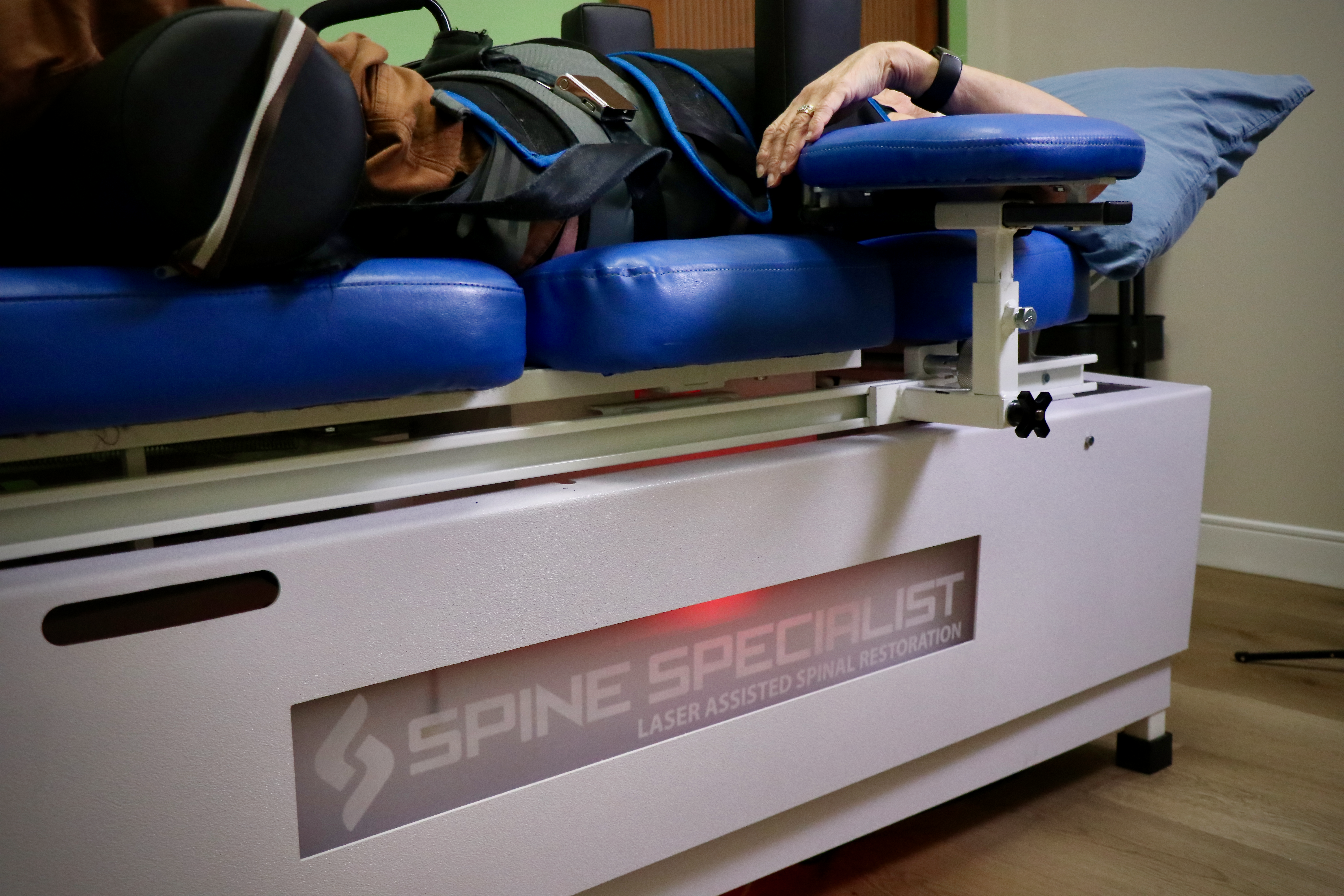
At Laser Spinal Decompression Clinic, we help bridge recovery gaps by offering non-surgical Robotic Class 4 Laser Spinal Decompression to support healing and bring relief for spinal conditions when walking alone isn’t enough.
A walking plan that aligns with your spinal diagnosis makes a significant difference, eliminating guesswork about safety or outcomes. A tailored walking plan for back comfort adapts to your body, fostering relief rather than hindrances.
With a condition-based walking program, you gain structure, allowing you to safely progress from initial gentle movements toward longer walks, guided by your body’s responses.
If you notice any challenges, let that be your cue to pause and seek additional spinal instability walking guidance or explore next steps like our Robotic Class 4 Laser Spinal Decompression for more focused non-surgical support.
If you begin to experience increasing discomfort, numbness, or any leg weakness while walking, that’s a signal to pause and re-evaluate your activity limits for a bulging disc.
Sometimes, you might notice your stride shortens or your walking feels less steady – these are important signals for adjusting your walking routine. Being aware of these cues for bulging disc walking helps you avoid any situations that could impact your recovery progress.
Recognizing when walking feels challenging for your back provides an opportunity to transition to gentler routines or reach out for spine care support.
At the Laser Spinal Decompression Clinic, we help you address these signals with non-invasive solutions – an option if you desire lasting relief from disc challenges, spinal degeneration, spinal narrowing, spinal instability, or increasing sciatica while walking.
When your goal is to restore mobility and strength with a bulging disc, combining a clinic-guided walking program with non-surgical spinal decompression enhances your overall recovery. Walking after decompression sessions offers a gentle way to gradually increase your activity as comfort improves and stiffness decreases.
At our Laser Spinal Decompression Clinic, we integrate walking with Robotic Class 4 Laser Spinal Decompression – providing a unique approach that supports disc healing, alleviates nerve compression, and encourages tissue repair in conditions like disc challenges, spinal degeneration, osteoarthritis, spinal narrowing, spinal instability, or sciatica.
Blending Class 4 laser therapy and walking provides structure to your activity progression plan for a bulging disc, ensuring you always know what’s safe during your back comfort journey.
If you’re considering which path best suits your life – activity adjustment, supportive therapies, or a combination – it all comes down to what helps you confidently move forward with greater comfort and renewed strength.
If you aim to stay active safely with a bulging disc, blending a graded walking plan for a bulging disc with advanced Robotic Class 4 Laser Spinal Decompression provides structure, relief, and consistent progress.
At our clinic, we guide you through each step, so you’re never left wondering which movements support or challenge your recovery.
This approach is ideal for adults managing disc challenges, spinal degeneration, osteoarthritis, spinal narrowing, spinal instability, or sciatica – helping you maintain mobility without inviting discomfort.
Robotic Class 4 Laser Spinal Decompression works by optimizing disc pressure during movement, easing nerve sensitivity, and supporting healing at the source.
We provide a realistic, clinic-supported walking program that adapts to your comfort levels and tracks your progress week by week.
Following a walking schedule for back comfort, combined with therapy to restore disc spacing from our clinic, sets you up to enhance mobility for bulging disc sensations and regain daily confidence in what your body can achieve – at your own pace and with expert guidance by your side.
When you’re seeking more than temporary solutions for a bulging disc, our Robotic Class 4 Laser Spinal Decompression delivers clinic-guided, non-invasive back comfort therapy tailored to your movement goals.
We combine treatment to restore disc spacing and the benefits of Class 4 medical laser therapy in a single, fully automated session to support your daily function, offering a solution that complements your walking and decompression program.
We’ve witnessed individuals with disc challenges, spinal narrowing, spinal degeneration, osteoarthritis, and sciatica rebuild their confidence with walking, regain mobility, and finally experience daily relief.
Client testimonials often highlight how our laser spinal decompression strategies for bulging discs provided them with the first comfortable steps they’ve had in years – allowing them to embrace life again.
You’ve gained valuable insights into safe walking practices for back comfort, understood when walking is beneficial for a bulging disc, and learned how to shape walking goals around specific challenges like sciatica, spinal narrowing, and spinal instability.
Developing a plan for your walking sessions makes each step purposeful – especially when you combine walking and decompression.
At our clinic, we’ve found Robotic Class 4 Laser Spinal Decompression creates a non-surgical path to relief, easing disc pressure and encouraging true healing for disc challenges, spinal degeneration, osteoarthritis, and more.
Our patients experience improved mobility and that invaluable confidence to walk with back comfort once more.
If you’re ready for progress, plan your walking sessions and receive a personalized bulging disc walking summary – book a consultation with us to seek guidance for disc concerns and discover how walking alongside decompression delivers lasting results.
© Laser Spinal Decompression Clinic, Winnipeg, MB, Canada.
Gentle walking can help maintain spinal movement and comfort with a bulging disc, especially if your comfort level remains steady or improves, and sensations don’t extend below your knee. It’s a low-impact activity that complements a personalized recovery plan.
Start with shorter walks (5-10 minutes) on flat, even surfaces at a comfortable pace. Maintain good posture (gently tucked chin, relaxed shoulders, compact steps) and wear supportive footwear. Gradually increase duration and always listen to your body, pausing if sensations intensify.
For sciatica, use brief intervals and frequent comfort checks. For spinal narrowing, maintain a steady pace on flat ground with rest breaks. For spinal instability, opt for slow and steady walking on even surfaces to minimize unexpected movements.
Adjust your activity or seek professional care if you experience increasing discomfort, numbness, leg weakness, a shortened stride, or less steady walking. These are signals that your current activity level might be impacting your recovery.
Combining a clinic-guided walking program with non-surgical spinal decompression enhances recovery. Walking after decompression sessions helps gradually increase activity, promotes circulation, and supports healthy movement patterns, while decompression alleviates pressure and enhances mobility.
Robotic Class 4 Laser Spinal Decompression is a non-invasive therapy that alleviates pressure from nerve compression and re-establishes disc spacing. It also uses targeted Class 4 medical laser therapy to reduce inflammation, accelerate healing, and calm discomfort, supporting overall daily function and recovery.
This combined approach helps maintain consistent activity without concerns of further impact, improves spine and nerve comfort, promotes tissue repair and reduces inflammation, and provides a clinic-backed routine tailored to your comfort level for safe and effective progress.