Spinal stenosis is a narrowing of the spaces within the spine that can place pressure on nearby nerves or the spinal cord.
It commonly develops from age-related changes involving spinal discs, facet joints, ligaments and surrounding bone.
Stenosis can affect different areas of the spine, including the neck and lower back. Symptoms vary depending on the location and severity of the narrowing.
The structural changes that can contribute to narrowing of the spinal canal or the spaces where nerves exit the spine (neural foramina) include:
Neurogenic claudication is a pattern of symptoms commonly associated with lumbar spinal stenosis.
People often describe:
Some patients discover that leaning over a shopping cart makes walking easier.
Spinal stenosis describes the anatomical narrowing. Neurogenic claudication describes the characteristic symptoms that narrowing may cause.
Not everyone with spinal stenosis experiences neurogenic claudication, and similar symptoms can occur with vascular conditions or other neurological disorders.
Narrowing of the main spinal canal, potentially affecting multiple nerve roots in the lumbar spine or the spinal cord in the cervical spine.
Narrowing affecting a nerve root as it travels toward the opening where it exits the spine.
Narrowing of the opening through which an individual spinal nerve exits. This may contribute to symptoms such as radiculopathy.
Some patients with lumbar spinal stenosis can manage symptoms with conservative treatment.
Depending on the presentation, options may include exercise rehabilitation, activity modifications, appropriate medical management and other clinician-directed therapies.
Non-surgical approaches generally focus on reducing symptoms and improving function rather than permanently reversing fixed bony narrowing.
Patients with severe or progressive neurological problems may require surgical evaluation.
At Laser Spinal Decompression Clinic in Winnipeg, we assess patients with persistent neck, back and nerve-related symptoms, including selected presentations involving spinal stenosis.
Many patients contacting our clinic have already tried physiotherapy, chiropractic care, medication, injections or other treatments without satisfactory improvement.
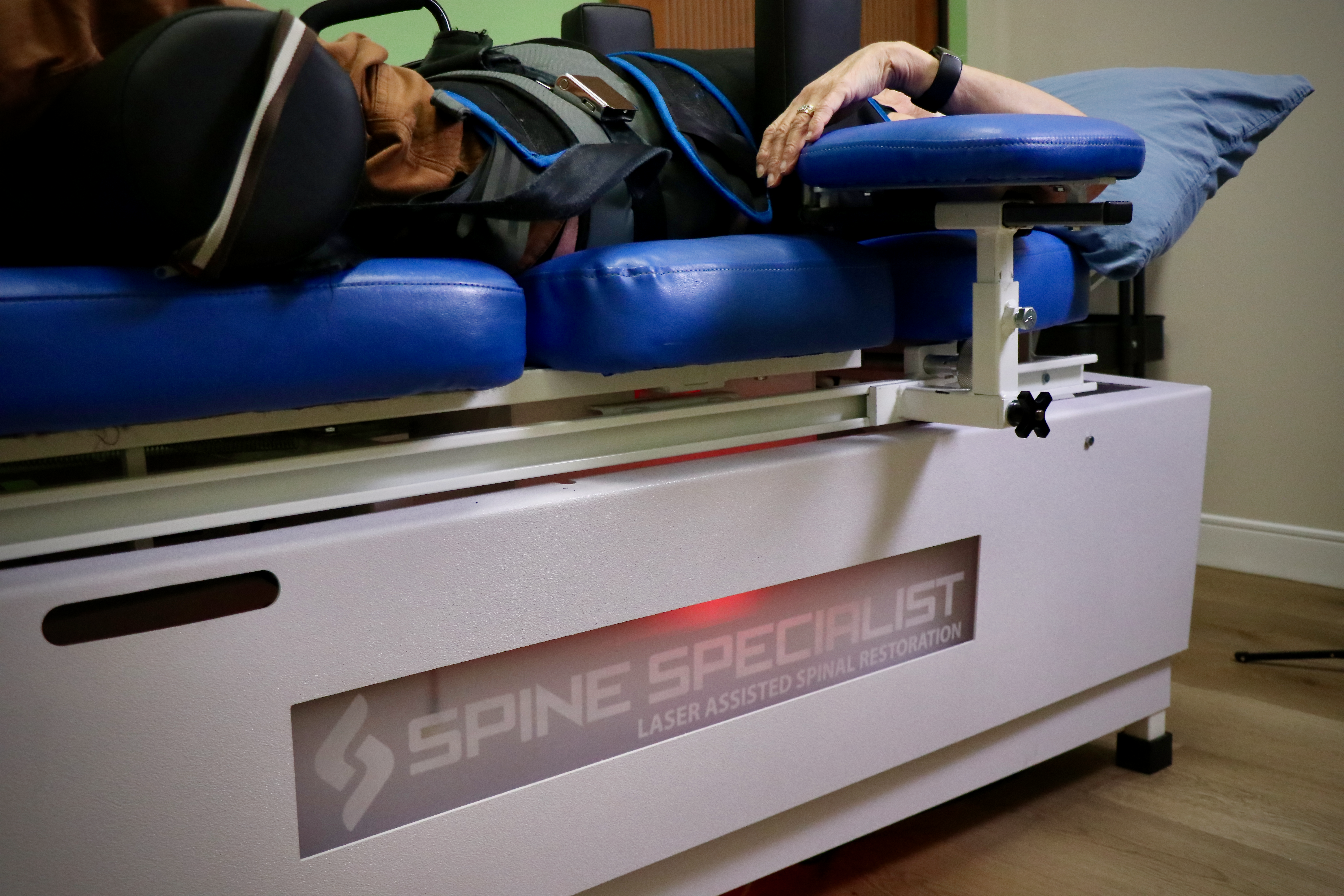
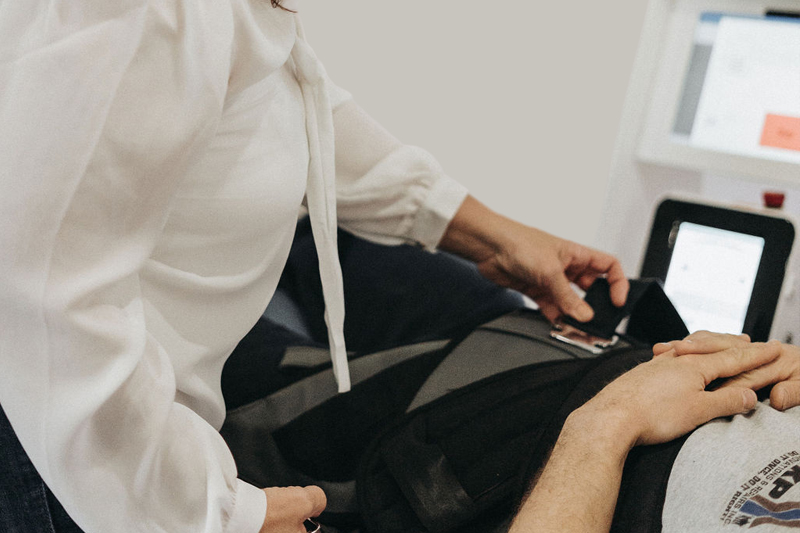
Our treatment system combines computer-controlled, non-surgical spinal decompression with a robotic Class 4 therapeutic laser delivered simultaneously. Only the Class 4 laser is robotic; the decompression table is computer-controlled.
The decompression table uses programmed pulling, holding and releasing cycles, with treatment parameters adjusted to the individual.
The robotic laser is used to complement treatment by helping manage pain, inflammation and surrounding muscle discomfort.
Patient selection is especially important with spinal stenosis. The location of narrowing, degree of bony involvement, potential instability, symptoms and neurological findings must be considered.
Our treatment is not established as a method for reversing fixed bony spinal stenosis. Evidence for decompression-based treatment specifically for neurogenic claudication is limited, and results cannot be guaranteed.
Patients who may be considered for assessment include those with:
Associated disc herniations may also be relevant to the assessment.
Not everyone with spinal stenosis is appropriate for decompression. Significant instability, advanced osteoporosis, prior surgery, neurological deficits and other medical factors require careful screening.
New bowel or bladder dysfunction, difficulty urinating, saddle numbness or significant progressive neurological weakness requires immediate emergency medical assessment. Do not wait for a routine consultation.
People with cervical spinal stenosis who develop progressive walking imbalance, hand clumsiness or neurological dysfunction should receive prompt medical assessment for possible spinal cord involvement.
Spinal stenosis is anatomical narrowing. Neurogenic claudication is a symptom pattern often associated with lumbar stenosis, typically involving leg discomfort or heaviness during standing and walking.
Lumbar spinal stenosis can contribute to nerve-related symptoms that become worse during walking or standing. However, vascular and other conditions can produce similar symptoms, so appropriate assessment is important.
Bending forward can increase the space available around certain lumbar nerve structures and may relieve symptoms associated with neurogenic claudication.
Selected patients with associated disc-related symptoms may be considered for assessment, but decompression has not been established as a way to reverse bony narrowing. Clinical suitability and outcomes vary.
No. Some patients manage symptoms conservatively. Surgery may be considered when symptoms remain severely limiting or neurological problems develop.
Not necessarily. During the initial phone consultation, we review symptoms, history and available imaging to determine whether further assessment or medical investigation is appropriate. Emergency warning signs require immediate medical assessment.
If you are experiencing persistent back or leg symptoms, or walking limitations associated with spinal stenosis, a complimentary phone consultation can help determine whether an assessment at our clinic may be appropriate. This is for non-emergency concerns.