Sciatica describes pain that travels along the pathway of the sciatic nerve, typically affecting the buttock and one leg. It may be associated with irritation or compression of nerve roots in the lower spine.
Symptoms may include shooting, burning or electric-like leg pain, tingling, numbness or weakness. Some people experience significant leg pain with relatively little lower back pain.
Sciatica is commonly used to describe pain radiating into the buttock and leg.
Lumbar radiculopathy refers more specifically to symptoms or neurological findings involving irritation or dysfunction of a lumbar or sacral spinal nerve root.
Radiculopathy may involve radiating pain, altered sensation, weakness or changes in reflexes.
Not all radiating leg pain is caused by spinal nerve-root compression, so an appropriate assessment is important.
Possible causes include:
Symptoms should be assessed alongside health history, physical findings and imaging when clinically indicated.
Many people with sciatica improve with conservative management.
Depending on the cause and severity, treatment may include appropriate activity, exercise-based rehabilitation, medication or other clinician-directed treatments.
Patients with persistent symptoms, significant weakness or inadequate improvement may require additional investigation or specialist assessment.
At Laser Spinal Decompression Clinic in Winnipeg, we assess patients experiencing persistent or recurring disc-related sciatica and lumbar radiculopathy.
Many patients have previously tried chiropractic care, physiotherapy, medication, injections or other treatments without satisfactory improvement.
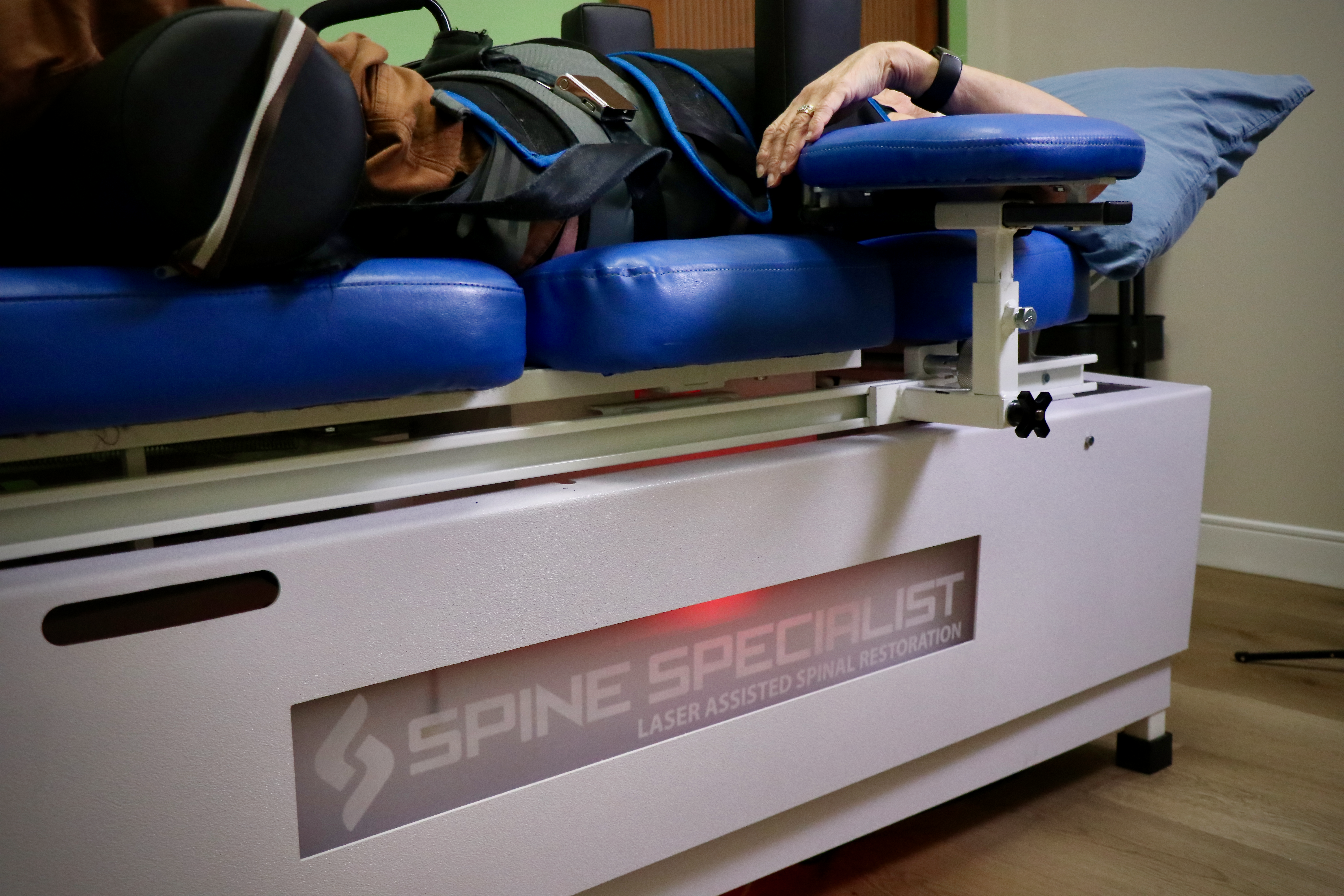
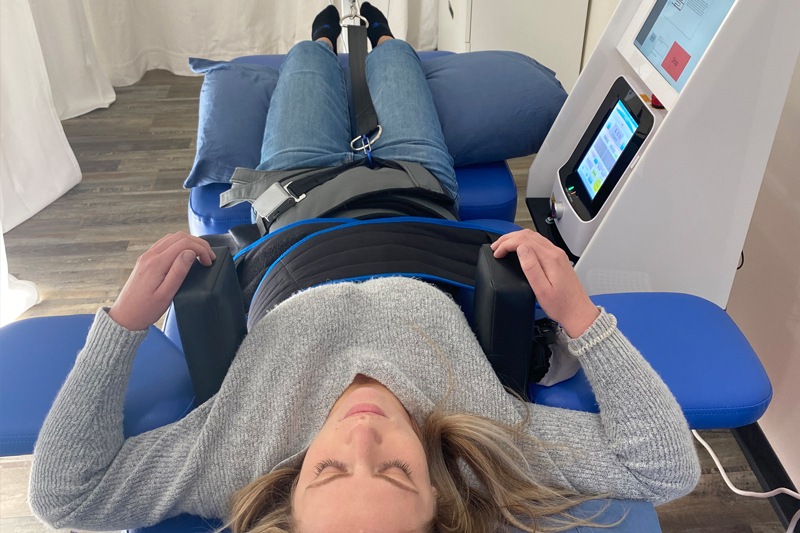
Our treatment approach combines computer-controlled, non-surgical spinal decompression with a robotic Class 4 laser delivered simultaneously. Only the Class 4 laser is robotic; the decompression system is computer-controlled.
The decompression system uses carefully regulated pulling, holding and releasing cycles. The robotic laser is used to help manage pain, inflammation and surrounding soft-tissue discomfort.
Our treatment goals include reducing pain, improving movement and supporting a return to everyday activities.
Not everyone with sciatica is a candidate, and treatment results vary.
Patients who may benefit from an assessment include those with:
Clinical suitability depends on the cause of symptoms, neurological findings, health history and relevant imaging.
New bowel or bladder dysfunction, saddle numbness, difficulty urinating, or significant progressive neurological weakness requires immediate emergency medical assessment. These symptoms may indicate cauda equina syndrome or another serious neurological condition.
Patients experiencing these symptoms should not wait for a routine chiropractic consultation.
Yes. Sciatica can cause prominent buttock or leg pain even when lower back pain is mild or absent.
No. Disc herniations are one possible cause, but spinal stenosis and other conditions may also produce sciatic symptoms.
Yes. Many patients improve with appropriate conservative management. Treatment recommendations depend on the cause, severity and neurological findings.
Some patients with disc-related symptoms may be considered for non-surgical spinal decompression following assessment. Evidence for decompression and traction-based approaches remains mixed, and improvement cannot be guaranteed. NICE guidance does not recommend traction for low back pain with or without sciatica.
Not necessarily. We review your health history, symptoms and any available imaging. Further investigation may be recommended when clinically indicated. Emergency warning signs require immediate medical assessment.
If you’re experiencing persistent or recurring sciatic pain and would like to explore whether our treatment approach may be appropriate, begin with a complimentary phone consultation. This is for non-emergency concerns.