
A herniated disc can cause back, neck or radiating nerve pain, but it does not always cause symptoms or require surgery. Many people improve with conservative care; assessment helps determine appropriate options.
A herniated disc occurs when a localized portion of spinal disc material extends beyond its normal boundaries. The displaced material may irritate or compress nearby nerves, potentially causing pain, numbness, tingling or weakness.
Herniated discs can develop through age-related disc changes, repetitive loading, injury or a combination of factors.
A disc herniation does not always cause symptoms. The location of the herniation, the nerves involved, inflammation and clinical findings are important when determining whether the disc is contributing to a person’s pain.
A localized herniation differs from a generalized bulging disc.
MRI reports use different terms to describe the shape of displaced disc material.
These descriptions help characterize the anatomy. They do not, by themselves, determine symptom severity, treatment suitability or whether surgery is necessary.
Depending on the spinal level and nerves involved, symptoms may include:
Many people with symptomatic disc herniations improve with conservative care. Treatment decisions depend on symptom severity, neurological findings, functional limitations and the patient’s overall health.
Conservative management may include activity modification, exercise-based rehabilitation, appropriate medication and other clinician-directed treatments.
At Laser Spinal Decompression Clinic in Winnipeg, we assess people experiencing ongoing disc-related neck, back and nerve symptoms.
Many of our patients have tried other treatment approaches without achieving satisfactory improvement.
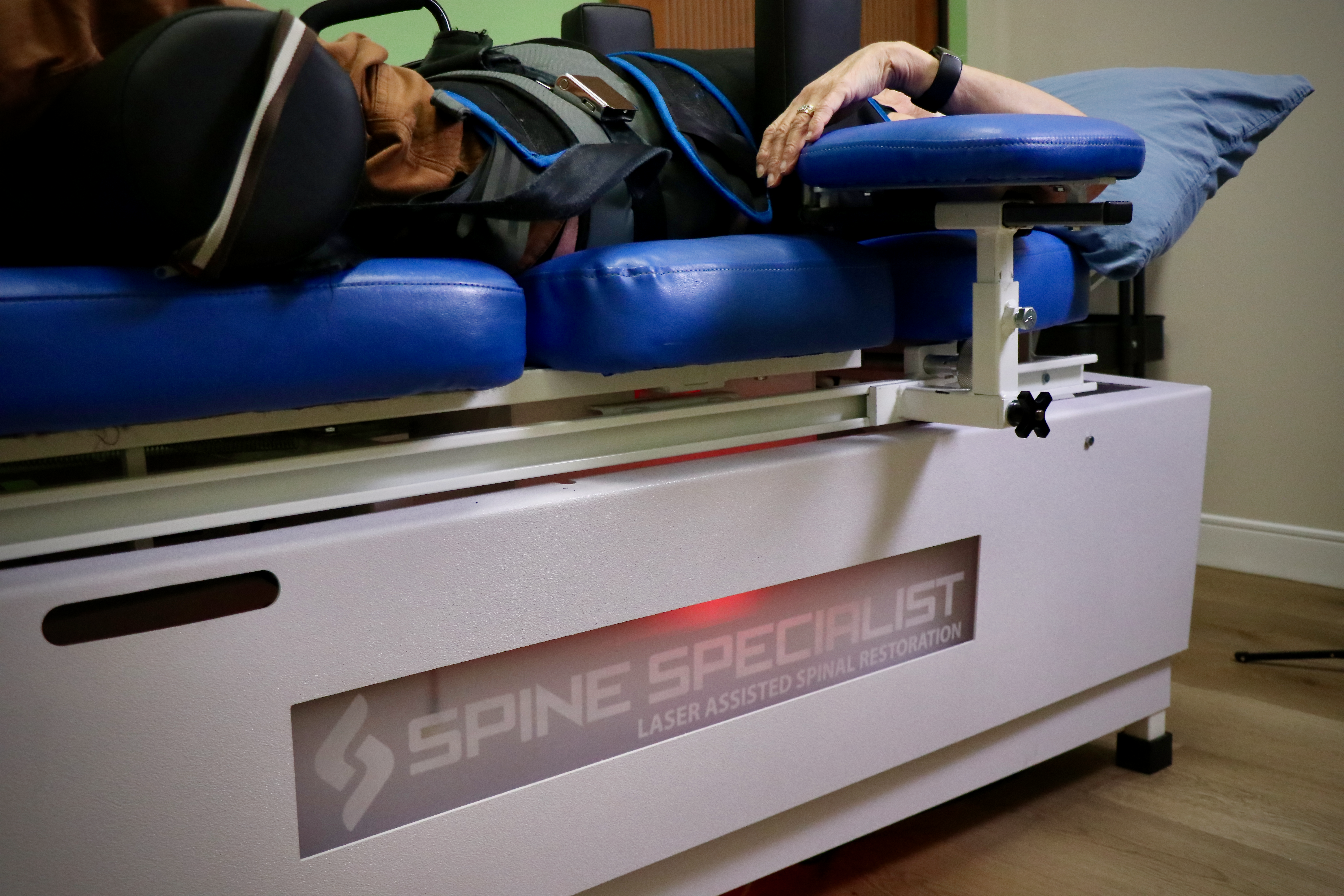
Our approach combines computer-controlled, non-surgical spinal decompression with a robotic Class 4 laser delivered simultaneously. Only the laser is robotic; the decompression itself is not robotic.
The decompression system uses programmed pulling, holding and releasing cycles to apply carefully controlled forces. The robotic laser is used to complement treatment by targeting pain, inflammation and surrounding soft-tissue discomfort.
Treatment goals include reduced pain, improved movement and better daily function. Structural disc repair or complete symptom resolution cannot be guaranteed. Our Research page discusses clinical case reports and their limitations.
New bowel or bladder dysfunction, difficulty urinating, saddle numbness or significant progressive neurological weakness requires immediate emergency medical assessment. These symptoms may indicate cauda equina syndrome or another serious neurological condition.
Patients with concerning neurological symptoms should not delay emergency care to book a routine consultation.
No. Many patients improve with conservative treatment. Surgery may be appropriate for certain severe, persistent or progressive neurological presentations.
Some disc herniations decrease in size over time. Changes vary between patients, and imaging improvements do not always correspond directly with symptoms.
No. Symptoms depend on nerve involvement, inflammation and other clinical factors, not simply the size of the herniation.
Not necessarily. During your phone consultation, we review your symptoms, health history and any available imaging to determine appropriate next steps. Additional investigation may be recommended when clinically indicated. Emergency warning signs require immediate medical assessment.
If you’ve been experiencing persistent or recurring disc-related symptoms, a complimentary phone consultation can help determine whether further assessment for our treatment approach may be appropriate.