TL;DR: Most chronic back pain treatments fail because they mask symptoms instead of fixing the root cause: spinal compression. A multi-modal approach combining spinal decompression, laser therapy, and (when needed) shockwave therapy addresses compression directly while activating your body’s repair systems. Results require 3 months of commitment, but 88.9% of patients report success.
Core Answer:
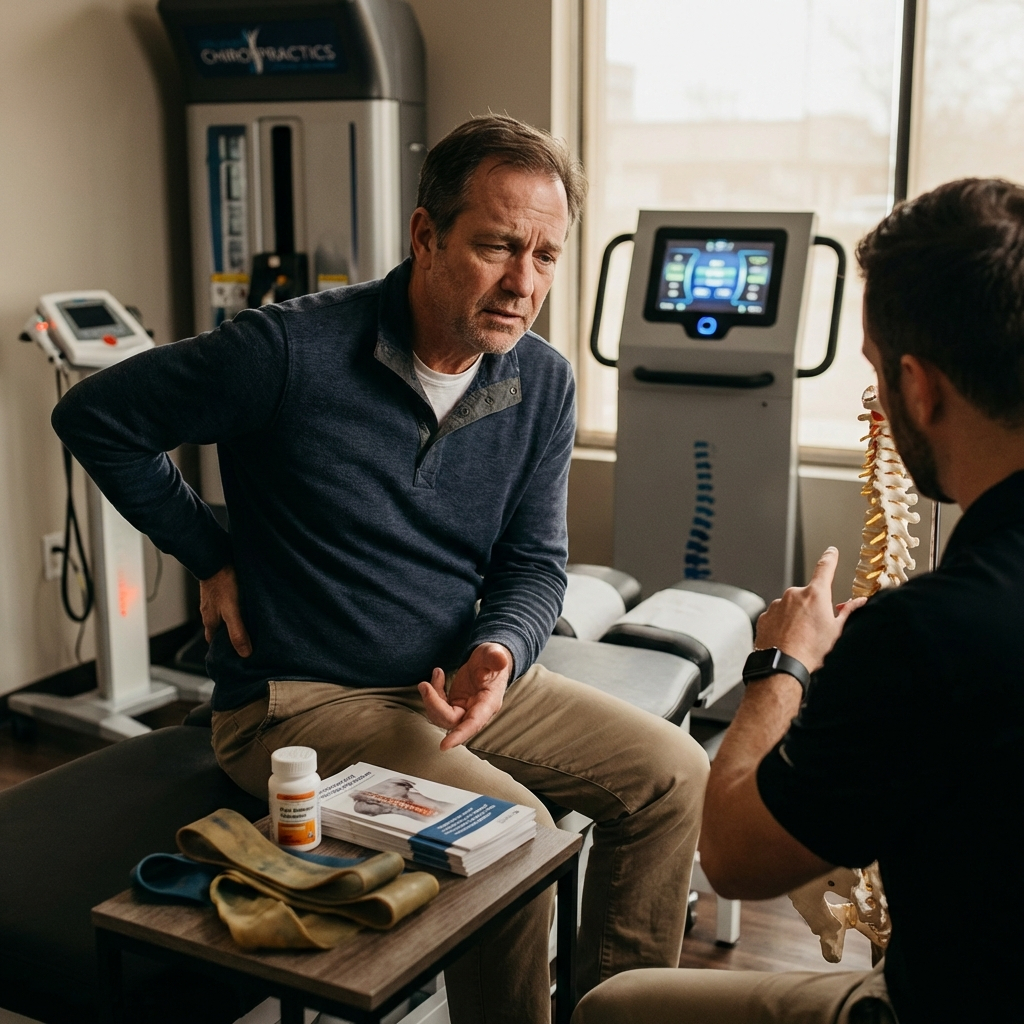
I’ve practiced chiropractic for 25 years. For the past five, I’ve focused exclusively on people who’ve been everywhere and tried everything.
You know who I’m talking about. The person who’s done physio, massage, acupuncture, chiropractic adjustments, pain management, cortisone injections. They’ve bought every gadget and cream online. They’re waiting for a surgical consult because they’ve been told there’s nothing else to do.
And they’re still stuck.
When someone comes to me with that history, I see a pattern right away.
Every single treatment they’ve tried addresses symptoms around the problem. None of them address the problem itself.
If you have compression in the spine and compression is the main pain generator, then massage, adjustments, injections, and gadgets are masking what’s happening. They give you temporary relief. The relief doesn’t last because the compression is still there.
Chronic pain emerges from multiple pathogenic pathways. This makes single-treatment approaches difficult to succeed. You’re not dealing with one issue. You’re dealing with a complex, interconnected web of tissue damage, inflammation, restricted mobility, and nerve involvement.
This is why people get stuck in treatment cycles.
Bottom line: Symptom management doesn’t fix spinal compression. You need to address the source.
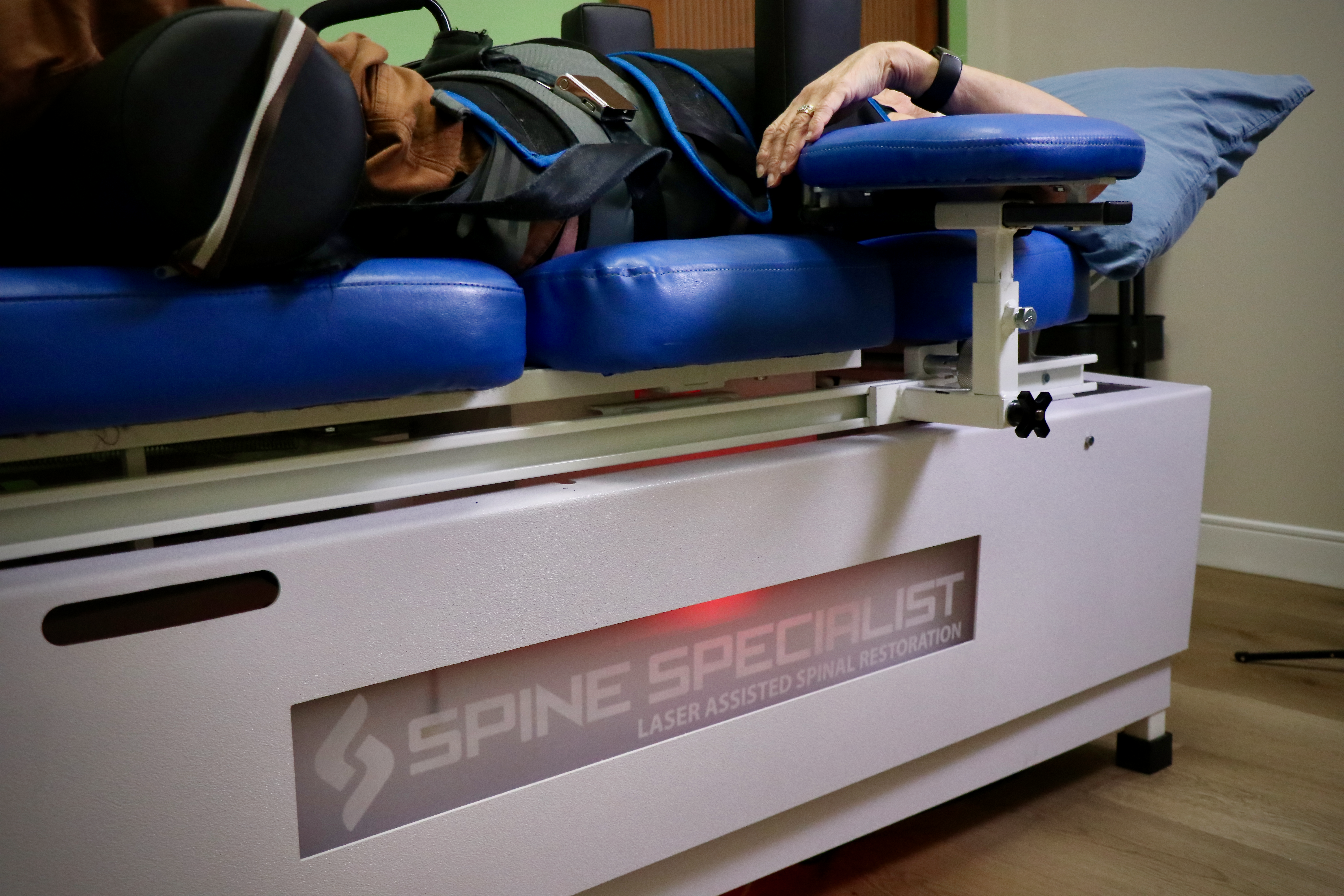
Spinal decompression combined with class 4 robotic laser therapy works at the cause. It decompresses the spine.
At the Mayo Clinic, a multi-center pilot study found patients with an average of ten years of chronic back pain experienced a 50% reduction in pain scores after two weeks of spinal decompression treatments. By the end of the six-week protocol, 88.9% reported success.
Here’s what I’ve learned: not everyone heals at the same rate.
The severity and chronicity of the problem play a role. So do lifestyle factors:
Some people respond well to decompression and laser within the first month. Others need something more.
Key insight: Decompression creates space and reduces pressure, but healing speed varies based on how long you’ve had the problem and how you support your body outside treatment.
After the first four weeks (10 to 12 visits), I do a reassessment.
If someone is progressing slowly (less than 10% improvement), I recommend adding Hydrowave therapy. This is a magnetic hydraulic-powered focused shockwave targeting damaged tissue at the cellular level.
The technology detects areas of damage (muscle, tendon, ligament, bone, nerve, or disc) and creates a controlled mechanical stimulus. This stimulus triggers your body’s repair systems.
Here’s what happens at the cellular level:
Extracorporeal shockwave therapy stimulates the body’s mesenchymal stem cells, which are essential for repairing bone, tendon, and muscle tissue. The acoustic waves create controlled micro-stress, prompting the release of growth factors and creating an environment for tissue regeneration.
For some people, this extra boost pushes the needle in the right direction.
What this means: Shockwave wakes up repair systems in tissue that’s been damaged and starved of blood flow for years.
This isn’t a quick fix.
I don’t accept patients who want to come in for one visit. After an initial phone consultation to determine if someone is a good candidate, we schedule the first phase of care: 12 visits over four weeks. The full protocol takes about three months of intensive work.
The timeline matters because healing happens in stages:
None of this works if you’re looking for someone to fix you.
Reality check: Three months feels long when you’ve been in pain for years. But tissue regeneration takes time. The protocol works because it’s consistent.
Many people come in with the belief that doctors will fix them. They don’t know their lifestyle, sleep, stress, outlook, nourishment, and hydration all play a part.
I find it fascinating we have this control over our health. For many people, this is a huge shift. They’ve never been taught this before.
The turning point happens somewhere between skeptical and cautiously optimistic. When they start feeling something they haven’t felt before (improvements they haven’t seen), they become active participants.
This moment is when healing accelerates.
The shift: From “fix me” to “I’m part of this.” Once people see progress they haven’t experienced before, they engage with the lifestyle factors that speed healing.
People travel from across Manitoba to receive this treatment. When someone is willing to drive two, three, four hours for care, it tells you something.
There’s a gap in conventional care for chronic compression cases.
International guidelines now emphasize multimodal, evidence-based strategies as critical for managing chronic low back pain. The association of therapies with different mechanisms of action represents a successful strategy for a wide range of pain conditions. This approach minimizes side effects and takes advantage of the additive or synergistic actions of individual treatments.
Knowing this and implementing it are two different things.
Most treatment approaches still operate in silos. You go to physio for one thing, chiropractic for another, pain management for something else. Nobody is coordinating the approach to address multiple pathways at once.
Why people travel: Multi-modal treatment coordinated under one protocol is rare. When people find it, they’re willing to drive for it.
If you’ve been everywhere and tried everything without lasting results, the question isn’t “What else should I try?”
The question is “Am I addressing the cause of the problem?”
If compression is the main pain generator, symptom management will only take you so far. You need a framework that creates space, supports tissue repair, and (when necessary) activates your body’s regenerative systems at the cellular level.
You also need to recognize healing is a partnership. The technology and protocols matter. So do your sleep, stress management, belief, and commitment to the process.
This approach supports wellness in patients managing chronic spinal conditions. Many patients report improved comfort and mobility after completing the protocol. Individual results vary based on health status, chronicity of the condition, and commitment to care.
Every patient is unique. Thorough assessment precedes all recommendations.
If you’re at the end of your rope, and the cost of staying the same has become unbearable, ask yourself: have you addressed the cause or managed the symptoms around it?
Chiropractic adjustments improve joint mobility, alignment, and communication between your brain and your body. Spinal decompression is what will create negative pressure inside the disc, pulling the herniated or bulging material back in and increasing nutrient flow. If you have disc compression (disc degeneration, disc herniations, or spinal stenosis), you need spinal decompression to effectively decompress the discs. They work well together. They’re different tools for different jobs.
Healing speed varies based on how long you’ve had the problem, severity of tissue damage, and lifestyle factors. If you show less than 10% improvement after four weeks, shockwave activates stem cells and increases blood flow to damaged tissue, accelerating repair.
Mayo Clinic research shows 50% pain reduction after two weeks for most patients. Full protocol takes three months because tissue regeneration happens in stages. Some people feel relief sooner. Others need the full timeline.
88.9% of patients in the Mayo Clinic study reported success with spinal decompression. Many people who were told surgery was their only option find relief with this protocol. Results depend on your specific condition and commitment to care.
Healing happens in stages. Stopping early means you get partial decompression without full tissue repair. The compression returns because the damaged tissue hasn’t regenerated. Consistency over three months is what produces lasting results.
Sleep, stress management, hydration, and nourishment directly impact healing speed. You don’t need to be perfect. But the people who engage with these factors see faster, more complete recovery.
If you have disc bulges, herniations, spinal stenosis, or degenerative disc disease confirmed on imaging, compression is involved. If you’ve tried multiple treatments without lasting relief, you’re likely treating symptoms instead of the source.
Decompression works by creating consistent negative pressure over time. Sporadic treatment doesn’t allow tissue to adapt and heal. The protocol is intensive because your body needs repeated stimulus to reorganize damaged tissue.