TL;DR: Chronic neck pain is often caused by spinal compression issues—not just stress or tension. Modern lifestyle factors like prolonged smartphone and computer use accelerate disc degeneration, creating a cycle of pain, inflammation, and sleep disruption. Spinal decompression therapy can address the root cause by rehydrating damaged discs through imbibition, while postural correction and lifestyle changes support long-term relief.
Spinal compression issues: Disc degeneration and osteoarthritis in the cervical spine, often dismissed as “normal aging”
Forward head posture: Smartphones and desk work create 30-50 pounds of stress on the spine (versus 10-12 pounds in neutral position)
Stress-inflammation cycle: Chronic stress triggers shoulder tension, daily repetitive trauma, and inflammatory responses that worsen pain
Sleep disruption: Pain affects sleep quality, which increases inflammation and creates a downward spiral
Modern lifestyle acceleration: Studies show 52.9% of chronic neck pain patients are smartphone overusers with higher disc degeneration scores
When you’re under chronic, unchecked stress, your body responds in a specific way. You tense your shoulders. You hold tension in your neck. This creates daily repetitive trauma to the cervical spine.
That daily trauma accelerates conditions like disc degeneration, which contributes to pain.
But there’s more. Chronic stress triggers an inflammatory response in your body. And inflammation makes all pain worse. It’s not just in your head—it’s a physiological cascade that’s literally changing your spine.
Research confirms this connection. Studies show the odds ratio between mental stress and chronic neck pain is 7.096. This indicates a powerful association between psychological stress and physical neck dysfunction.
Bottom line: Stress creates physical changes in your cervical spine, not just muscle tension.
Here’s how it typically unfolds:
Pain disrupts sleep: Neck discomfort makes quality sleep impossible
Poor sleep triggers inflammation: Sleep deprivation activates inflammatory responses that worsen pain
Brain fog sets in: Without adequate rest, cognitive function declines
Quality of life deteriorates: Relationships suffer, work performance drops, joy disappears
Rock bottom moment: The cost of inaction finally outweighs the cost of seeking help
It’s hard to function when you’re not getting enough sleep. You’re living in a complete state of brain fog.
With unchecked stress, sleep deprivation, and building pain, many people experience a rapid decline in their quality of life. It affects their relationships. Their livelihood. Their joy for life.
Key insight: The pain-sleep-inflammation cycle accelerates degeneration and must be interrupted to achieve lasting relief.
Continuous cell phone use and hours on computers will greatly accelerate disc degeneration and osteoarthritis in your neck. This isn’t speculation—it’s what chiropractors see in assessments every day.
Your head should weigh about 10 to 12 pounds in a neutral position. But when you create that forward lever from forward head posture, your head can feel like 30, 40, or even 50 pounds. That stress travels all the way down your spine, even contributing to low back pain.
A study of 2,438 young patients with chronic neck pain found that 52.9% were categorized as smartphone overusers. Those with excessive smartphone use had significantly higher cervical disc degeneration scores.
The modern work environment is literally accelerating spinal degeneration.
Quick math: Forward head posture increases spinal load by 200-400%, sending stress from your neck to your lower back.
Compression issues like disc degeneration and osteoarthritis are often brushed off by doctors as normal wear and tear or normal with aging. They really don’t have anything to offer these patients, so they’re told there’s nothing that can be done.
This is misleading.
How you age and whether your quality of life declines greatly depends on two factors:
Your lifestyle habits
How you take care of your spine
It’s been accepted that as you get older, you ache and your quality of life must decline. But this doesn’t have to be true.
It’s really just a different way of looking at it—offering a way to actually address it and getting results.
Reality check: Disc degeneration can be addressed through spinal decompression and rehydration, not just “managed” through pain medication.
When someone comes in with chronic neck pain, chiropractors look for compression issues in the spine. This includes assessing whether the patient has conditions that respond well to spinal decompression.
But there’s also a critical mindset component:
Do they believe in the solution?
Are they committed to the process?
Do they believe they can be well?
If the answer to those questions is yes, it’s a recipe for success.
Patients with chronic neck pain have often been stripped of hope from other providers. Effective care provides hope—not empty promises, but a clear path forward.
Success factors: Clinical treatment + patient belief + consistent commitment = lasting results.
People typically come in:
Not sleeping
Extremely stressed
In significant pain
Struggling with day-to-day activities
Unable to shoulder check when driving
Experiencing greatly decreased range of motion
Dealing with headaches, low energy, brain fog
Feeling very skeptical because they’ve tried everything without relief
Often the first thing people feel as they begin the intensive phase is a feeling of being much lighter or taller. They report feeling cautiously optimistic with the changes.
They soon begin to notice:
More range of motion in the neck
Less pain with movement
Better sleep quality
Improved posture
Enhanced quality of life
Generally happier mood and increased energy
Results vary based on individual circumstances and commitment to care.
Typical timeline: Three months of intensive work creates effective and lasting change, not quick fixes.
What’s actually happening in those early visits that creates that “lighter” sensation before the pain even changes?
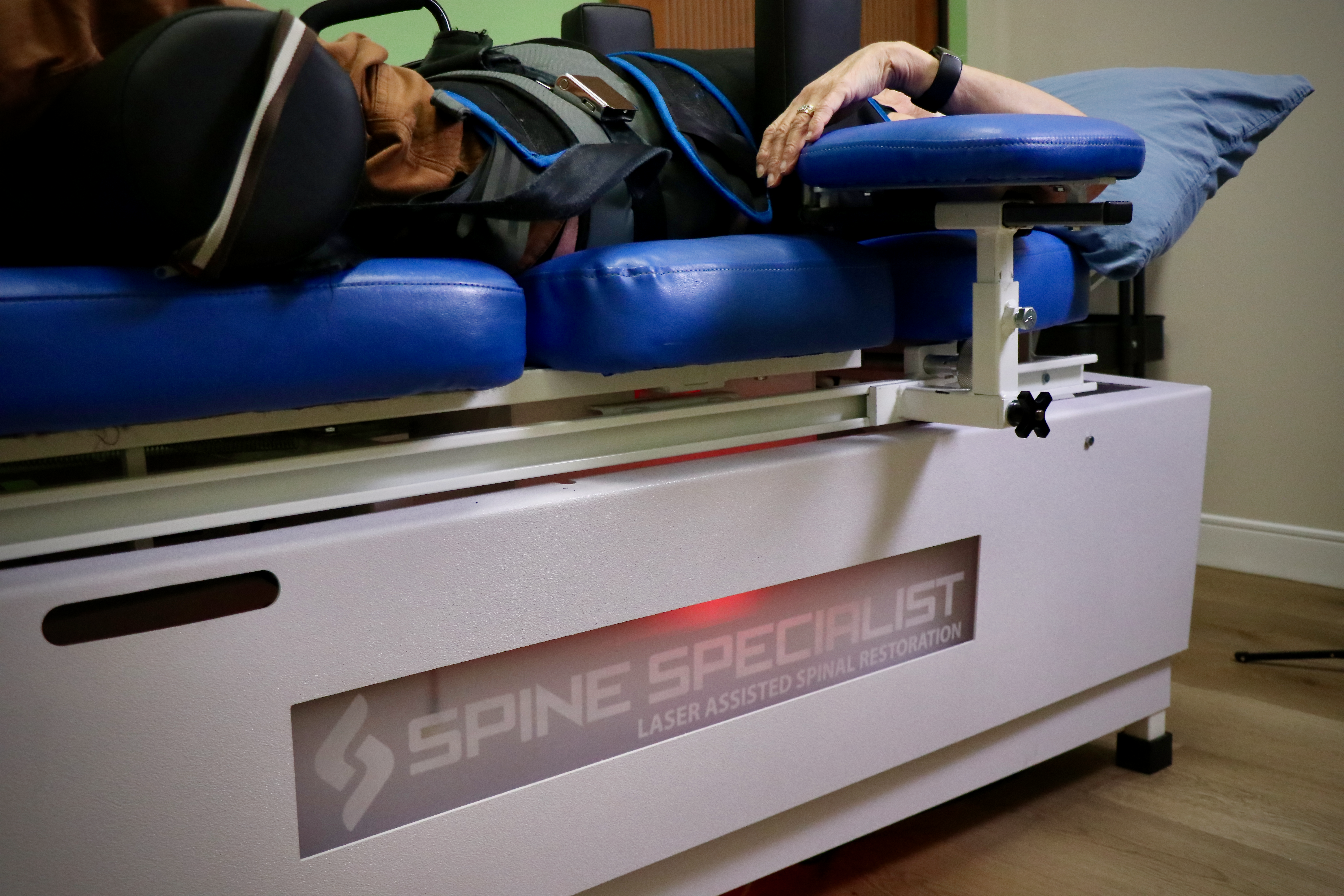
Spinal decompression starts the rehydration process in the discs through a process called imbibition.
Here’s how it works:
The decompression table applies controlled pull and release to the spine
Nutrients and hydration flow into the disc during decompression
Waste products are released from the disc
The disc gradually rehydrates over multiple sessions
Disc height may increase, potentially making you measurably taller
One of the reasons people “shrink” as they age is due to loss of disc height. This process can help reverse that.
The science: Imbibition is the scientific term for disc rehydration through cyclic loading and unloading, which draws nutrients in and expels waste.
Simply correcting ergonomics on your own will not reverse the dysfunction at the joint and decades worth of damage buildup. However, you can start protecting your neck right now.
It’s important to not only be mindful of proper posture, but actively do things daily to improve that forward head posture.
Bruegger’s stretch is a postural correction exercise that helps counteract the daily repetitive trauma of sitting behind desks.
These aren’t one-time fixes—they’re daily practices that support spinal health.
Take regular breaks from screens every 30-45 minutes
Position monitors at eye level to reduce forward head posture
Use smartphone at eye level instead of looking down
Practice active postural correction exercises daily
Manage stress through proven techniques (meditation, exercise, therapy)
Important limitation: Self-care helps prevent worsening but cannot reverse existing compression damage—that requires professional intervention.
Neck pain should be checked right away if it comes with:
Sudden onset weakness or numbness in the arms or hands
Extreme trouble with balance or coordination
Severe headaches, dizziness, or vision changes
Fever or feeling unwell along with neck stiffness
Any changes in bladder or bowel control
Early evaluation can prevent small problems from becoming big ones.
Even if you don’t have these warning signs, persistent neck pain that affects your sleep, your work, your relationships, or your ability to do the things you love deserves thorough assessment.
When to act: If neck pain persists beyond a few weeks or interferes with daily function, professional assessment can identify underlying compression issues.
Chiropractors specializing in chronic pain often tell people flat out: if they don’t believe they can be well or are not committed to the process, it’s not worth it to begin. They won’t see results.
The mind is a powerful thing.
This typically takes about three months of intensive work to see really effective and lasting change. It’s not a quick fix. It requires consistency, commitment, and belief that wellness is possible.
Between 50% and 85% of people who experience neck pain will report it again 1 to 5 years later. Additionally, 30% will develop chronic symptoms. Most people with neck pain do not experience complete resolution of symptoms with traditional approaches.
That’s why addressing the root cause—the compression issues in the spine—rather than just managing symptoms makes such a difference.
Success requirement: Clinical intervention works best when combined with patient belief, commitment, and willingness to complete the full treatment protocol.
Both. Chronic stress causes shoulder tension and daily repetitive trauma that accelerates disc degeneration. This creates structural compression issues in the spine. The stress-inflammation cycle worsens existing spinal problems, but the underlying cause is often disc degeneration or osteoarthritis that needs to be addressed.
Forward head posture from looking down at phones increases the effective weight of your head from 10-12 pounds to 30-50 pounds. This stress accelerates disc degeneration. Studies show 52.9% of chronic neck pain patients are smartphone overusers with significantly higher cervical disc degeneration scores.
Disc degeneration can be addressed through spinal decompression therapy using a process called imbibition. This rehydrates damaged discs by cycling nutrients in and waste out. While complete reversal may not always be possible, disc height can increase and symptoms can improve significantly. Results vary by individual circumstances.
Most people feel “lighter or taller” within the first few visits. Noticeable improvements in range of motion and pain reduction typically occur within 2-4 weeks. Lasting, effective change usually requires about three months of consistent, intensive treatment combined with postural correction exercises.
Stretching and massage address muscle tension but don’t resolve underlying compression issues like disc degeneration, disc bulges, or osteoarthritis. If your neck pain is caused by structural problems in the spine, symptom management through muscle work provides only temporary relief. The compression must be addressed.
Regular chiropractic adjustments focus on joint mobility and alignment. Spinal decompression uses traction technology to create negative pressure in the discs, which pulls nutrients and hydration in through imbibition. This specifically targets disc-related compression issues that cause chronic pain.
Seek immediate evaluation if neck pain comes with sudden weakness or numbness in arms/hands, balance problems, severe headaches, vision changes, fever with neck stiffness, or any bladder/bowel control changes. These may indicate serious neurological or medical conditions requiring urgent care.
Between 50-85% of people experience neck pain recurrence within 1-5 years, and 30% develop chronic symptoms with traditional approaches. However, addressing root causes (compression issues) rather than just managing symptoms, combined with daily postural practices and lifestyle modifications, significantly improves long-term outcomes.
Chronic neck pain is often structural, not just stress. Compression issues like disc degeneration and osteoarthritis cause persistent pain that stress management alone cannot resolve.
Modern lifestyle accelerates spinal degeneration. Smartphone and computer use create 30-50 pounds of stress on the cervical spine through forward head posture, rapidly accelerating disc damage.
The pain-sleep-inflammation cycle must be interrupted. Poor sleep triggers inflammatory responses that worsen pain, creating a downward spiral that affects quality of life, relationships, and cognitive function.
Spinal decompression addresses root causes through imbibition. This process rehydrates damaged discs by cycling nutrients in and waste out, potentially increasing disc height and providing lasting relief.
Mindset and commitment are critical for success. Effective treatment requires belief in recovery, commitment to 3 months of intensive care, and daily postural correction practices—not quick fixes.
Ergonomics and self-care prevent worsening but cannot reverse damage. Bruegger’s stretch and proper posture support spinal health, but existing compression issues require professional intervention.
Most people don’t achieve lasting relief with traditional approaches. Between 50-85% experience recurrence within 1-5 years because symptom management doesn’t address underlying compression—targeting the root cause makes the difference.
This information is educational. Individual outcomes depend on specific circumstances and commitment to care. Every patient is unique, and thorough assessment precedes all recommendations. Consult a healthcare professional for personal medical advice.