Living with the pain of a bulging or herniated disc can be debilitating, affecting every aspect of your daily life. From the sharp, shooting pain that can radiate down your limbs to the persistent ache in your back, these spinal conditions can severely limit your mobility and quality of life. While many patients are told surgery is their only option, innovative non-surgical treatments are now providing effective alternatives with less risk and faster recovery times.
Before exploring treatment options, it’s important to understand the difference between disc bulges and herniations, as well as their underlying causes.
Your spine consists of 23 vertebral discs that serve as crucial shock absorbers between the bones of your spine. Each disc has two main components:
In a healthy state, these discs allow for smooth movement while maintaining proper spacing between vertebrae and protecting the nerves that exit the spinal canal.
A disc bulge occurs when the entire disc extends beyond its normal boundaries, typically due to age-related degeneration or sustained pressure. Key characteristics include:
A herniation represents a more severe disc problem where the inner nucleus material actually breaks through the outer annulus wall. Key characteristics include:
Both disc bulges and herniations can develop from similar causes, though herniations often result from more acute or severe instances of these factors:
As we age, our discs naturally lose water content and become less flexible, making them more prone to bulging and eventually herniating. This is why disc problems become more common after age 30.
Consistent poor posture, especially when sitting for extended periods, places uneven pressure on spinal discs. Similarly, improper lifting techniques can create excessive strain on discs, leading to both acute and chronic disc issues.
Jobs requiring frequent lifting, twisting, or vibration exposure (like long-distance driving or operating heavy machinery) significantly increase the risk of disc problems.
Sudden traumatic events, such as car accidents, sports injuries, or falls, can cause immediate disc herniation when the forces involved overcome the disc’s structural integrity.
Some individuals inherit a greater susceptibility to disc problems due to variations in the genes responsible for disc composition and durability.
Several lifestyle elements can contribute to disc problems:
The symptoms of disc bulges and herniations can overlap, though herniations typically produce more intense symptoms due to greater nerve involvement:
Conventional approaches to disc problems often fail to provide lasting relief:
While these can temporarily reduce pain and inflammation, they don’t address the underlying structural issue with the disc and can mask important warning signals your body is sending.
Once commonly prescribed, extended bed rest is now recognized as potentially harmful, leading to muscle weakening and potentially worsening disc problems over time.
Though valuable as part of a comprehensive approach, generic exercises without addressing the specific disc pathology may not provide sufficient relief.
These injections may temporarily reduce inflammation and pain, but their effects are often short-lived, and multiple injections can have diminishing returns.
Traditional surgical options for disc problems include:
While sometimes necessary in severe cases, these surgical approaches carry significant risks:
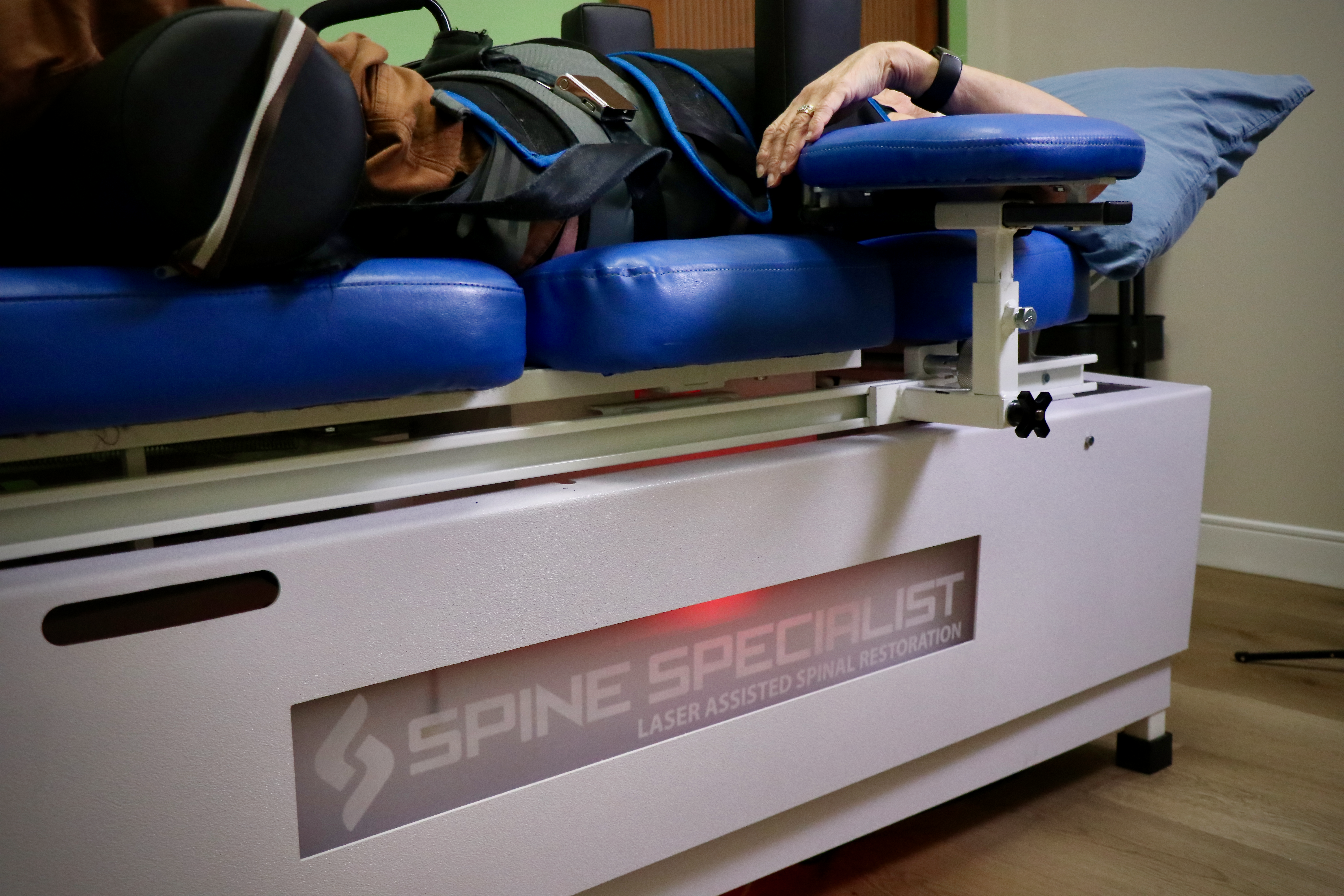
At Laser Spinal Decompression Clinic in Winnipeg, we offer an advanced, non-invasive solution that effectively addresses both disc bulges and herniations: Robotic Class 4 Laser Spinal Decompression therapy.
Our innovative treatment combines two powerful therapeutic technologies to deliver comprehensive relief:
Using computer-controlled robotic technology, our treatment system gently and precisely creates negative pressure within the affected discs. This specialized decompression:
Unlike generic traction or manual decompression, our robotic system delivers precisely calibrated decompression forces based on your specific condition, disc level, and body characteristics.
Simultaneously with decompression, our advanced Class 4 medical laser delivers therapeutic light energy deep into the affected discs and surrounding tissues. This high-intensity laser therapy:
The combination of these two technologies creates a synergistic healing effect that can provide significant relief where other treatments have failed.
Our approach offers numerous benefits over traditional treatments:
Experience significant pain reduction without the risks associated with surgery, injections, or long-term medication use.
Rather than simply masking symptoms, our treatment targets the actual disc bulge or herniation that’s causing your pain.
Continue your daily activities throughout your treatment program, without the extended recovery period required after surgery.
Avoid the side effects and dependency concerns associated with long-term pain medication use.
Each session builds upon previous progress, promoting actual physical improvement in disc health rather than temporary symptom management.
Before beginning treatment, our specialists conduct a thorough evaluation to understand the exact nature of your disc problem. This assessment includes:
This information allows us to determine if you’re a good candidate for Robotic Class 4 Laser Spinal Decompression and to create a customized treatment protocol tailored to your specific disc condition.
During each session:
Most treatment sessions last approximately 20 minutes.
While each treatment plan is individualized, most disc bulge and herniation patients benefit from:
“After an MRI confirmed I had a herniated L5-S1 disc, my doctor recommended surgery. I was desperate for an alternative and found Laser Spinal Decompression Clinic. Within three weeks of starting treatment, the constant pain down my leg had diminished significantly. By the end of my treatment plan, I was pain-free and able to return to all the activities I love. The best part? No surgery, no medications, and no downtime.” – Michael R.
“I developed a bulging disc from years of office work and poor posture. The pain was affecting my sleep, my work, and my ability to play with my children. The Robotic Laser Spinal Decompression treatment was life-changing. It was comfortable, effective, and allowed me to continue working while receiving care. Six months later, I remain pain-free and have learned valuable strategies to prevent future problems.” – Sarah T.
Our treatment has helped hundreds of patients find relief from disc-related pain, but it’s important to determine if you’re an ideal candidate. Robotic Class 4 Laser Spinal Decompression may be right for you if:
However, this treatment may not be suitable for everyone. It’s generally not recommended for patients with:
During your initial consultation, our specialists will determine if you’re a good candidate for this advanced therapy.
Our team is specifically trained in Robotic Class 4 Laser Spinal Decompression therapy, with extensive experience treating disc bulges and herniations at all levels of the spine.
We invest in the most sophisticated therapeutic equipment available, including the latest robotic decompression systems and Class 4 medical lasers, providing treatment options not available at most clinics.
We don’t just treat your symptoms – we address the underlying disc problem while providing education and support for long-term spinal health.
From your first consultation through your entire treatment journey, we prioritize your comfort, understanding, and active participation in your recovery process.
Living with the debilitating effects of a disc bulge or herniation isn’t something you have to accept. With Robotic Class 4 Laser Spinal Decompression, effective relief may be within reach – without the risks and recovery time of surgery.
We invite you to schedule a complimentary phone consultation with one of our doctors to determine if you’re a candidate for this innovative treatment. During this consultation, we’ll discuss your specific condition and help you understand if our approach could be the solution you’ve been searching for.
Don’t let disc pain control your life any longer. Contact Laser Spinal Decompression Clinic in Winnipeg to schedule your complimentary phone consultation and take the first step toward a pain-free, active lifestyle.
Phone: (204) 506-0169
Email: drsuzanne@backpainsolution.ca
Location: 2-3 St Mary’s Rd, Winnipeg, MB, Canada (located inside Norwood Health and Wellness)
By scheduling a consultation, you acknowledge you have read our Privacy Policy and agree to our Terms of Use.