You wake up stiff, find the workday challenging, or miss out on activities you enjoy – all because of persistent back discomfort. A lingering question remains: is a bulging disc a significant concern, or will it naturally improve?
When you’re experiencing a lumbar disc protrusion, the discomfort extends beyond soreness. You might begin to notice numbness, tingling, or sciatica symptoms – all indicators of nerve compression from a bulging disc that can influence your long-term mobility and daily life.
It’s understandable to seek clarity on when to consider a back disc bulge, or if there’s a potential for progression. You may wonder which symptoms truly signal an issue, why some days feel more challenging, or what activity limitations related to a bulging disc might mean for your spinal well-being.
At Laser Spinal Decompression Clinic, we regularly support individuals facing these questions. We are here to help you recognize important indicators and understand when non-invasive options can help restore your quality of life with spinal comfort.
Understanding where your condition fits within the disc pathology spectrum helps you comprehend its impact on your well-being and determine beneficial steps for relief.
Identifying these signs early helps you to act – our approach at Laser Spinal Decompression Clinic utilizes Non-Surgical Spinal Decompression combined with Class 4 Laser Therapy to target disc bulges and herniations, reduce inflammation, and help support an active life without invasive procedures.
Discomfort radiating from your low back into your leg, numbness and weakness in the leg, or sudden, sharp sensations down the limb can all point to sciatica from a bulging disc. These symptoms arise when the disc presses on your nerve root, often causing a range of radiculopathy symptoms – tingling, burning, or muscle weakness – that can influence regular movement and daily well-being.
If you’re experiencing loss of mobility with a disc bulge or begin to notice balance changes, foot drop, or issues with bladder or bowel control, these are progressive neurological deficits that should prompt you to consult a healthcare professional promptly. These are vital indicators for spinal symptoms and require attention from a qualified practitioner.
If you’re experiencing nerve symptoms or persistent back discomfort from a bulging disc, non-surgical spinal decompression therapy provides a focused approach for relief. By gently creating space between your vertebrae, this treatment helps reduce disc pressure safely, supports spinal disc height, and encourages the disc material to move away from pinched nerves.
At Laser Spinal Decompression Clinic, we combine non-surgical spinal decompression with Class 4 Medical Laser Therapy for enhanced healing and to relieve nerve compression naturally – all without relying on invasive procedures or prescriptions. If you’re curious about your eligibility for decompression therapy, we guide you through what to expect so you can move toward your daily activities with greater ease.
If you’re experiencing back discomfort from a bulging disc, Class 4 laser therapy for the spine offers a scientifically backed, non-invasive way to manage symptoms and support recovery.
This technology uses photobiomodulation to accelerate the healing of damaged discs and nerves, while reducing swelling for measurable laser-assisted relief in your back.
At Laser Spinal Decompression Clinic, we’ve seen first-hand how Class 4 medical laser therapy transforms comfort and mobility for patients with bulging or herniated discs, sciatica, and related nerve discomfort.
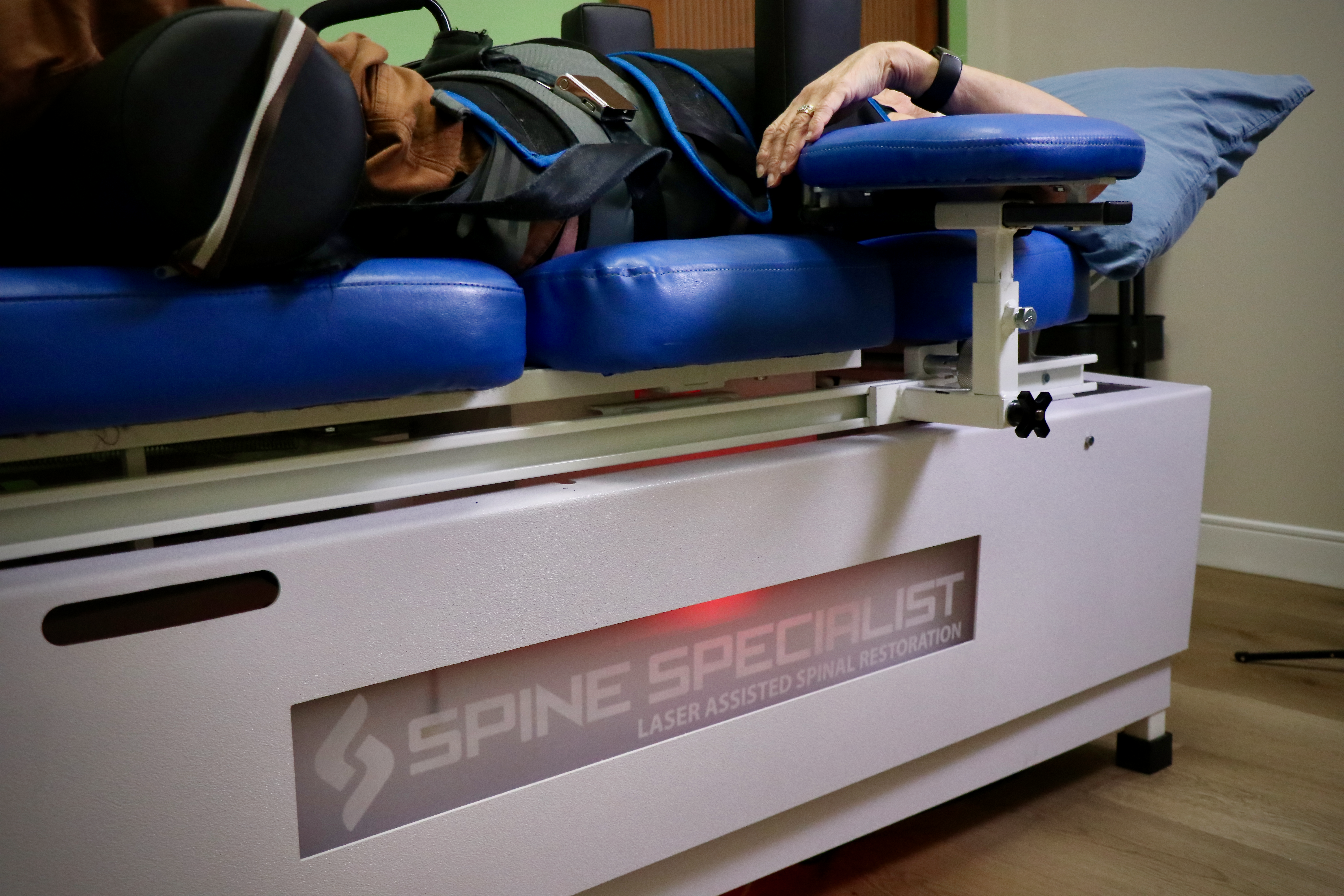
Effective care for back comfort calls for options that go beyond masking symptoms – especially when a bulging disc begins to impact your active lifestyle. Our robotic Class 4 laser spinal decompression protocol offers a non-invasive path to better mobility by combining spinal decompression with high-intensity laser therapy to directly address both spinal challenges and inflammation.
Since every treatment discussed has its own strengths, choosing the right approach for your back comfort depends on the impact of your disc bulge, level of nerve involvement, and your recovery priorities.
If you seek a non-invasive solution that addresses the real sources of disc discomfort while pursuing an active lifestyle without lengthy downtimes, our robotic Class 4 laser spinal decompression ties it all together – helping you optimize healing and regain the mobility you need for daily living.
When you’re seeking to understand the implications of a bulging disc or looking for relief that doesn’t involve invasive procedures, you’ll want a practical solution that gets you moving again. At Laser Spinal Decompression Clinic, we’ve developed a non-invasive bulging disc solution using Robotic Class 4 Laser Spinal Decompression. This treatment directly addresses nerve compression, discomfort, and limitations in mobility by combining the effects of spinal decompression plus Class 4 laser benefits, all guided by certified professionals who’ll create a customized spinal care plan for you.
This protocol is tailored to fit your body, comfort level, and lifestyle needs – no sedation, needles, or hospital stays required. Each step is handled with your long-term mobility and lasting comfort in mind, and you can return to daily activities with minimal disruption throughout the process.
Robotic Class 4 Laser Spinal Decompression at our clinic helps you pursue a non-invasive path with conservative care that’s proven, targeted, and rooted in the latest comfort-enhancing technology.
If you’re considering the impact a bulging disc might have and want a proven, non-invasive way to get moving again, we offer Robotic Class 4 Laser Spinal Decompression – our advanced approach for back comfort.
This evidence-driven therapy combines computer-controlled spinal decompression with high intensity Class 4 laser features to relieve pressure, reduce bulging and inflammation, and help restore your disc height and mobility – without invasive procedures or lengthy downtime.
Many of our patients tell us they’ve regained flexibility and left persistent discomfort behind after a course of treatment – even after years of frustration from other approaches.
You’ve learned how crucial it is to understand the implications of a bulging disc – spotting nerve symptoms early, assessing your potential risks, and knowing when to take action matters.
Taking a non-invasive path like decompression and Class 4 laser therapy supports a safer, proven way to alleviate discomfort, restore mobility, and get back to what you love.
With our Robotic Class 4 Laser Spinal Decompression, we deliver targeted, conservative care that helps you pursue a non-invasive path in many cases and regain your confidence in movement.
If you’re ready to enhance well-being and improve quality of life, schedule a complimentary spinal decompression consult today. Take action for bulging disc relief and get a personalized path to comfort started right away.
With a bulging disc, the annulus fibrosus, the disc’s outer wall, weakens and allows the nucleus pulposus inside to shift outward, potentially contacting nerves and causing discomfort. This is considered a disc protrusion where the outer layer is still intact. A herniation, however, involves the inner disc material breaking through the outer layer and often pressing on nerves more significantly. Symptoms like persistent radiating discomfort, numbness, or sudden weakness can indicate that a disc bulge is progressing towards herniation.
Nerve compression from a bulging disc can manifest as discomfort radiating from your low back into your leg, numbness and weakness in the leg, or sudden, sharp sensations down the limb, which are characteristic signs of sciatica. These symptoms occur when the disc presses on a nerve root, leading to various radiculopathy symptoms like tingling, burning, or muscle weakness that can interfere with regular movement and daily well-being.
You should promptly consult a healthcare professional if you experience loss of mobility with a disc bulge or begin to notice progressive neurological deficits such as balance changes, foot drop, or issues with bladder or bowel control. These are critical indicators of spinal symptoms that require immediate attention from a qualified practitioner.
Non-surgical spinal decompression therapy works by gently creating space between your vertebrae. This process helps to safely reduce disc pressure, support spinal disc height, and encourage the disc material to move away from pinched nerves. It eases nerve discomfort by promoting the natural reabsorption of bulging disc tissue and offers muscle relaxation, which improves microcirculation during treatment and accelerates tissue recovery.
Class 4 Medical Laser Therapy utilizes photobiomodulation to accelerate the healing of damaged discs and nerves, while effectively reducing swelling for measurable relief. It enhances microcirculation, delivering more oxygen and nutrients to your discs, thus creating a better healing environment. The laser quickly reduces inflammation, which can help improve your range of motion after each session, and provides precise, targeted tissue repair, making it an excellent complement to spinal decompression for safe and convenient comfort.
Robotic Class 4 Laser Spinal Decompression is recommended because it offers a non-invasive path to improved mobility by combining spinal decompression with high-intensity laser therapy to directly address both spinal challenges and inflammation. This protocol reduces bulging and supports disc height using gentle computerized decompression to relieve pressure on nerves, while instantly alleviating inflammation and nerve pressure with focused Class 4 medical laser energy, boosting microcirculation for quicker healing. Its automated robotic delivery ensures consistent and precise sessions, and the dual-action system simultaneously eases nerve irritation and decreases bulging.
The treatment process at Laser Spinal Decompression Clinic begins with a complimentary phone consultation to discuss symptoms and answer questions. This is followed by a comprehensive spinal evaluation at the clinic to map out a personalized care plan. Patients then begin regular sessions, typically 20 to 25, utilizing a padded table for robotic decompression paired with Class 4 laser therapy. Progress is tracked with periodic reassessments and updates to the plan to ensure continuous improvement.