Three Essential Exercises to Avoid Lower Back Pain and Support Spine Health
Dr. Suzanne Buffie, Chiropractor
Table Of Contents
How Simple Routines Prevent Low Back Pain
Up to 80% of adults will face lower back pain at some point, making prevention a priority for long-term wellness. Recent research confirms that just 15 minutes a day of targeted exercise can sharply reduce risk—improving spinal stability and functional strength, while keeping pain at bay.
This guide walks you through three proven exercises that address the root causes of mechanical back pain. You’ll find clear instructions, practical adaptations for all fitness levels, and tips for maintaining spinal health through lifestyle changes.
Consistent, properly adapted daily exercises—like glute bridges and planks—support spine health and cut back pain risk, even for those with previous injuries or limited time.
What Are the Three Best Exercises to Avoid Lower Back Pain?
The glute bridge, plank, and cat-cow stretch are consistently ranked as the top exercises for lower back pain prevention in both clinical research and therapeutic practice.
Glute Bridge: Builds posterior chain strength and reduces lumbar stress. Adaptable to most fitness levels.
Plank: Engages deep abdominal muscles and enhances core endurance, supporting upright posture.
Cat-Cow Stretch: Promotes gentle spinal movement and flexibility, easy to integrate into warm-ups or cool-downs.
How to Perform Each Exercise Safely for Maximum Benefit
Proper form is the foundation of both safety and progress when working to prevent lower back pain with home exercises.
Glute Bridge Technique
Lie on your back with knees bent and feet hip-width apart, flat on the floor.
Press heels into the ground, tighten your glutes, and lift your hips until your body forms a straight line from shoulders to knees. Avoid arching the lower back.
Hold for 2–3 seconds at the top, then lower slowly. Start with 2–3 sets of 10–15 repetitions.
Tip: Keep your ribs tucked and core engaged throughout. Progress to single-leg bridges only when pain-free.
Plank Technique
Begin face down, supporting your weight on forearms and toes. Keep elbows under shoulders.
Draw your belly in, brace your core, and maintain a neutral spine—hips neither sagging nor piked.
Hold for 15–30 seconds, building up to longer holds as strength improves. Repeat 2–3 times.
Tip: Watch for shoulder rounding or holding your breath. Modified (knee) planks are suitable if standard form causes discomfort.
Cat-Cow Stretch Technique
Start on hands and knees, wrists under shoulders and knees under hips.
Inhale, arching your back and looking gently upward (cow). Exhale, round your back and tuck your chin (cat).
Move slowly through 5–10 cycles, focusing on smooth, controlled transitions.
Tip: Avoid forcing the motion or jerking the neck—gentle range is safest, especially for those with osteoporosis.
How Can These Exercises Be Adapted for Special Populations or Health Conditions?
Safe adaptation of back exercises ensures nearly everyone can benefit, regardless of physical limitations or underlying health conditions.
Disc Injury and Herniation Modifications
Choose knee-supported planks and bridges with reduced elevation to limit spinal loading.
Avoid end-range flexion or twisting movements, which can stress sensitive discs.
Pause exercise and consult a provider if pain radiates down the leg, or new numbness appears.
Osteoporosis and Older Adults
Use wall- or chair-supported bridges and cat-cow stretches for greater safety.
Work within a comfortable, pain-free range—never forcing motion or adding heavy axial loads.
Professional guidance is recommended if there’s a history of vertebral fracture or advanced bone loss.
Safety Tip: Always consult a healthcare professional if new or severe pain, numbness, or weakness develops during back exercise routines.
What Additional Habits Can Support Lower Back Health?
Non-exercise behaviors play a powerful role in reducing back pain risk and supporting recovery.
Lifestyle and Ergonomic Strategies
Practice safe lifting by bending at the knees and keeping loads close to your body.
Set reminders for posture checks and movement breaks, especially during long periods at a desk.
Optimize your workspace with supportive seating and adjustable screens to reduce spinal strain.
Stay active throughout the day with gentle walking or stretching between tasks.
Cumulative Benefit of Healthy Habits
Combining ergonomic awareness with structured core exercise reduces recurrence and promotes lifelong back health.
Healthy weight, balanced nutrition, and quitting smoking further protect spinal structures and enhance recovery.
FAQ Section
What exercises should I NOT do if I have lower back pain? Avoid loaded spinal flexion, high-impact moves, or unsupervised routines during acute pain.
What is the single best exercise for lower back pain? Glute bridges and planks are generally most effective, but the best choice depends on your individual condition.
Are these routines enough for severe or chronic cases? While daily home routines help most mild-to-moderate cases, complex or longstanding pain often needs personalized assessment and therapies.
For complicated or persistent pain, individualized assessment remains best practice.
Summary & Key Takeaways
The three best exercises for lower back pain prevention—glute bridges, planks, and cat-cow stretches—work together to build core strength, improve flexibility, and support daily function.
Combining these routines with safe lifting habits, ergonomic awareness, and daily movement sets the foundation for long-term spinal health.
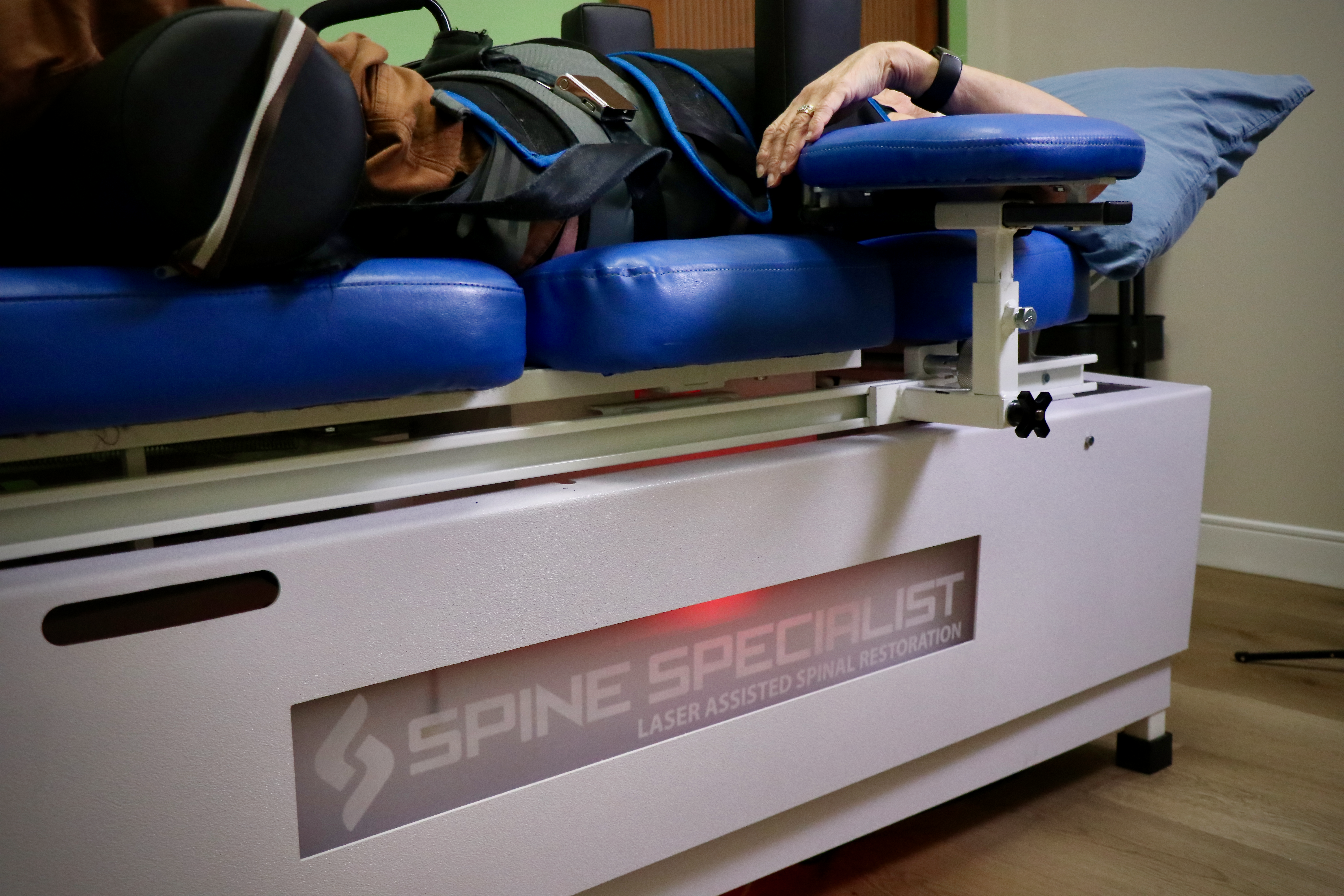
Robotic Laser Spinal Decompression is a non-surgical service that may be considered for appropriately assessed patients with disc herniations, disc bulges, degenerative disc changes, spinal stenosis, sciatica, and certain causes of neck or back pain. Individual suitability is determined following an assessment.
Quick Links
Contact
Laser Spinal Decompression Clinic (located inside Norwood Health and Wellness)