Decisions about back pain, neck pain and spinal conditions should be based on an individual assessment. Surgery is sometimes necessary, and medically indicated surgery should not be delayed. In other situations, a healthcare provider may recommend beginning with or continuing an appropriate course of conservative care.
Non-surgical spinal decompression is one possible conservative-care service that may be discussed following an assessment. It is not a substitute for necessary surgery, and it is not appropriate for every person or every spinal condition.
Surgical and non-surgical care are not interchangeable. The appropriate approach depends on factors such as the diagnosis, symptoms, clinical findings, neurological status, general health and recommendations of the patient’s healthcare team.
Some people may require a surgical opinion or surgical treatment. Others may be advised to consider conservative-care options.
If surgery has been recommended, questions about its purpose, timing, anticipated benefits, limitations and alternatives should be discussed with the recommending medical professional. Patients should not postpone medically indicated care in order to try spinal decompression or another conservative service.
Conservative care may include education, activity guidance, exercise or rehabilitation, medication, manual care and other services considered appropriate by a qualified healthcare provider.
The choice of care should reflect the individual patient’s condition, health history and needs. No single approach is suitable for everyone, and one form of care should not be assumed to replace another.
A person may receive care from more than one healthcare professional. Communication among providers may be helpful when several forms of care are being considered.
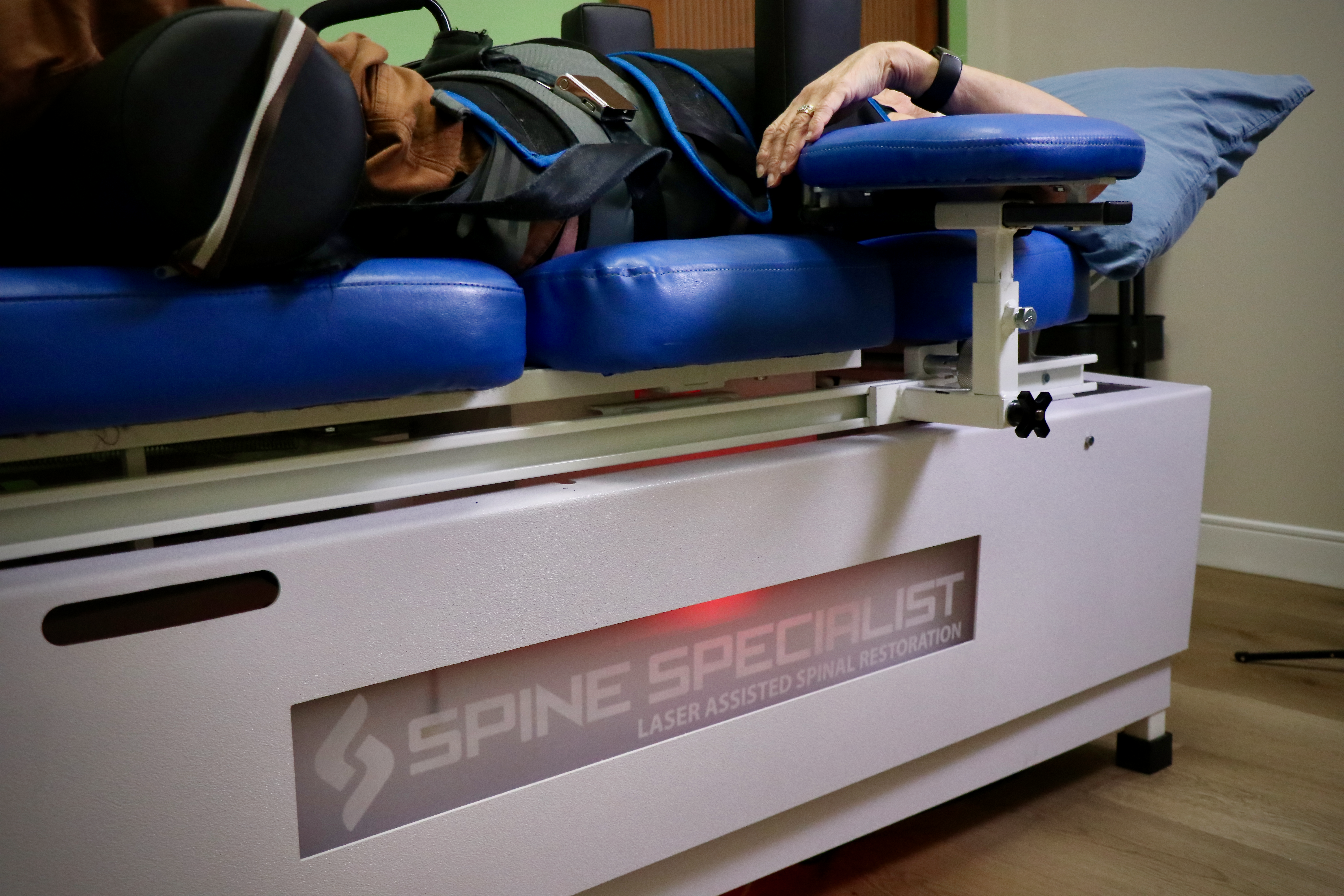
Non-surgical spinal decompression is a form of motorized traction that applies controlled force to the spine. It may be considered for appropriately assessed patients with certain spinal conditions.
At the Laser Spinal Decompression Clinic, the decision to recommend this service follows an assessment. The assessment is used to review the patient’s symptoms, health history, examination findings, available imaging and relevant contraindications.
An assessment does not guarantee that spinal decompression will be recommended. Referral to another healthcare professional may be appropriate when a different type of evaluation or care is needed.
Spinal decompression should not be presented as a way to prevent or avoid surgery. Whether surgery is necessary is a medical decision based on the individual condition and clinical circumstances.
For some patients, a healthcare provider may consider conservative care before surgery. For others, a surgical consultation or procedure may be appropriate without delay.
Patients who have been advised to obtain surgical care should discuss any proposed change in their treatment plan with the relevant medical professional. A consultation about conservative care should not be used to disregard or postpone an urgent recommendation.
There is no universal number of treatments or standard timeline that applies to every patient.
If spinal decompression is considered appropriate, the proposed frequency and duration should be based on the assessment, the patient’s clinical circumstances and ongoing review. A treatment plan may be modified or discontinued when clinically appropriate.
Individual responses vary. Continuing care should not be based solely on completing a predetermined number of visits.
Before beginning a proposed course of care, patients should have an opportunity to discuss:
No treatment can guarantee a particular change in symptoms, physical function or imaging findings.
Imaging findings and symptoms do not always correspond directly. An MRI or other image is one part of a broader clinical assessment.
Spinal decompression should not be described as guaranteed to retract, reverse or heal a disc herniation, restore disc height or produce a particular structural change.
If follow-up imaging is clinically indicated, its interpretation should be discussed with an appropriately qualified healthcare professional. Treatment decisions should consider the patient’s overall clinical presentation rather than relying on a promised imaging result.
A surgical opinion may be appropriate whenever the patient’s healthcare provider recommends one based on the diagnosis, symptoms or clinical findings. It should not depend on first completing a fixed number of spinal-decompression treatments.
Someone who has received a surgical recommendation may wish to ask:
These questions support an informed discussion. They do not imply that surgery is unnecessary.
Before deciding whether to begin spinal decompression, a patient may wish to ask:
The answers should be based on the individual assessment rather than a universal protocol.
There is no single treatment pathway for every person with neck pain, back pain, disc herniation, disc bulging or spinal stenosis. The appropriate plan depends on the individual assessment and may involve one or more healthcare professionals.
Non-surgical spinal decompression may be one possible conservative-care option for an appropriately assessed patient. It does not guarantee relief, structural change or avoidance of surgery.
Individual responses vary. Benefits, limitations, risks and alternatives should be discussed following an assessment.
Learn whether non-surgical spinal decompression may be appropriate for your needs.